
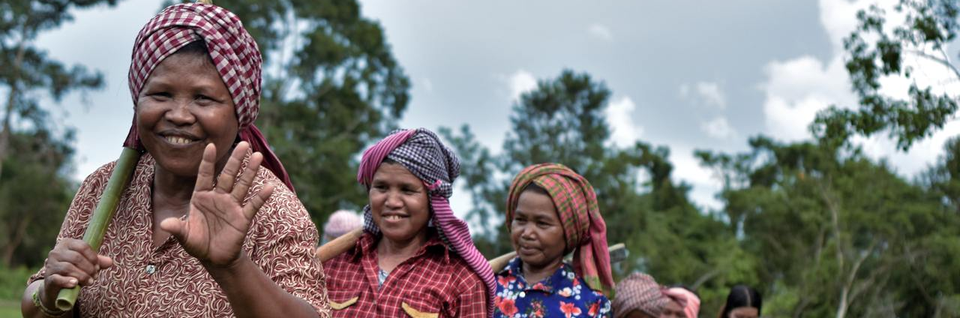
Every Kui individual—men, women, youth, elders, and children—shall possess global knowledge while maintaining pride in, love for, and self-identification as Kui. The Kui people will have a clear sense of belonging to their tribe, particularly cherishing their culture, traditions, and language, practicing them more frequently in daily life, and providing education in both culture and language. More Kui people will independently initiate activities to disseminate and promote Kui language, culture, tradition, and history using their own resources for the collective good. This strategy focuses on Documentation (the past), Training (the present), and Infrastructure/Succession Planning (the future).
Key Indicators:
- Documentation and Resources:
- Number of mechanisms or working groups established and operational for specific tasks.
- Number of research documents produced and disseminated (including history, customs, customary laws, beliefs, arts, and indigenous knowledge in text, audio, and video formats).
- Utilization level: Number of instances where documented materials are used for further study or dissemination.
- Capacity Building (Education Focus):
- Increase in graduates: Growth in the number of Kui individuals (all genders and ages) completing higher education and postgraduate studies.
- Number of community leaders: Number of Kui individuals with the capacity to lead and serve as core human resources for community development.
- Impact and Identity (Cultural Pride):
- Levels of pride and self-identification: Increase in the number of Kui individuals who openly identify as and take pride in being Kui indigenous persons.
Participation and Dissemination: Number of activities or initiatives led by Kui individuals to
Every Kui indigenous community across Cambodia will have a collective system, capacity, and ownership over governance based on Kui traditional patterns that ensure sustainable development and conservation (language, identity, culture, land, and resources) while being able to resolve their own issues. Each community will take ownership of protecting and using their land and resources sustainably in accordance with environmentally friendly traditional rules.
Key Indicators:
- Governance & Structure:
- Number of communities with clear traditional leadership committees (not just on paper, but with structure, roles, and member recognition).
- Number of communities with internal regulations or statutes developed based on customary law and implemented in practice.
- Inclusivity & Succession:
- Percentage of women in leadership roles (Target: increase to 30% or 40%).
- Percentage of youth participation in leadership structures to ensure “inheritance” of mission.
- Land & Resource Management:
- Area of land or spirit forests protected (measured in hectares) that the community has protected or registered as collective/traditional land.
- Number of communities with clear land-use maps showing boundaries and eco-friendly land use.
- Autonomy & Conflict Resolution:
- Success rate of internal conflict resolution: Number of cases (land or family disputes) resolved through traditional mechanisms without requiring external authorities or courts.
The Kui Hai Network shall have a collective system and a strong, active, and representative network to participate in the development and conservation of language, identity, culture, land, natural resources, and the economy. All Kui communities will trust the Kui Hai Network, participate in its work voluntarily (without payment), and contribute personal resources to support it. The network will have robust systems, a clear working structure, and sufficient resources to operate effectively and sustainably.
Key Indicators:
- Structure & Governance:
- Number of local communities joined as network members (representing broad inclusivity).
- Establishment and implementation of statutes/internal regulations approved and respected by all members.
- Regularity and quality of Board/Leadership Committee meetings and decision-making.
- Sustainability & Finance:
- Percentage of operational budget derived from member contributions (measuring self-reliance vs. 100% aid dependency).
- Existence of clear financial and administrative management systems for the Secretariat.
- Impact & Advocacy:
- Number of policies or challenges addressed: Number of cases where the network successfully advocated with the government or stakeholders.
- Secretariat responsiveness: Level of satisfaction among local members regarding the Secretariat’s coordination and support services.
The Kui indigenous people shall possess food sovereignty and an independent, robust economy based on their own cultural patterns and methods.
Key Indicators:
- Enterprise & Production:
- Number of Small and Medium Enterprises (SMEs) or agricultural communities established and operated by the Kui based on Kui skills/resources (e.g., weaving crafts, forest-derived products, eco-tourism).
- Number of standardized products with distinct identity (Branding): Number of products packaged and branded as “Kui Brand” or possessing Geographical Indication (GI) status.
- Income & Livelihood:
- Growth in household income from local occupations: Percentage of households with increased income from agricultural or craft sales (thereby reducing dependence on migrant labor).
- Community development funds: Total profit reserved by each community for collective public benefit (e.g., road repairs, supporting the impoverished, or organizing festivals).
- Market & Network:
- Number of market partners or distribution channels: Number of companies, shops, or supermarkets accepting Kui community products for sale.
- Market stability: Existence of clear purchase-sale contracts for agricultural or other products with private partners (Contract Farming or Partnerships).
The Kui indigenous people shall be able to protect their rights and interests by establishing problem-solving mechanisms and strengthening formal relations with stakeholders, particularly state authorities. Every Kui community will ensure the security of its land and resources using existing state legal mechanisms, such as Collective Land Titles (CLTs), Community Protected Areas (CPAs), and Agricultural Communities (ACs). Furthermore, community capacity regarding legal rights and indigenous protections will be strengthened, resolving issues through judicial and other available mechanisms.
Key Indicators:
- Legal Security & Land Tenure:
- Number of communities receiving full legal recognition (broken down by stages: Ministry of Rural Development for identification, Ministry of Interior for legal entity status, and Ministry of Land Management for collective titles).
- Number of communities with active agreements or collaborations with state entities (e.g., Community Forestry agreements as effective interim protection mechanisms).
- Human Rights Defenders (HRDs):
- Number of Kui HRDs with clear competencies (not just “trained,” but proficient in using law and technology for documentation and advocacy).
- Increase in participation of women and youth in HRD groups (Target: minimum 30% women) to ensure diverse advocacy voices.
- Diplomacy & Conflict Resolution:
- Number of consultation platforms or meetings with local/national authorities (measuring relationship levels and the transformation of “conflicting parties” into “collaborative partners”).
- Peaceful resolution rate: Number of rights abuse cases resolved through negotiation or Alternative Dispute Resolution (ADR) as specified in the strategy.
- Number of alliances with national/international organizations: Partners supporting the Kui Hai Network in providing legal aid or safety protection.
The Kui Hai Organization shall be a Kui-led institution with robust management systems, capable and committed human resources, and sufficient financial resources to implement its programs effectively.
Key Indicators:
- Governance & Leadership:
- Effectiveness of the Board of Directors (BOD): Regularity of meetings and documentation of strategic decisions.
- Institutional policy implementation: Full application of management policies (HR, Finance, Procurement) beyond theoretical existence.
- Human Resources & Capacity:
- Staff Competency: Percentage of staff effectively applying new knowledge (post-training) to practical tasks.
- Staff Retention: Ability to retain capable staff long-term, reducing frequent turnover.
- Finance & Systems:
- Audit: Receipt of an annual “Unqualified Audit Opinion” from independent auditors, demonstrating transparency and donor trust.
- Funding Diversification: Percentage of the budget derived from diverse sources (member contributions, services) to reduce external aid dependency risks.
- Monitoring & Evaluation (M&E) System: Use of M&E systems for Adaptive Management and learning, rather than simple existence.
 Preah Vihear
 admin@kuihai.org
 015 498 667