
I. Introduction:
The Enduring Echo of Iron in Cambodian History
A. The Kui People and their Metallurgical Prowess: An Overview
The intricate tapestry of Cambodian history is woven with threads of diverse ethnic contributions, among which the Kui people hold a significant, albeit often understated, place. Known historically by various names such as Kuay, Kuy, or Soai, this ethnic minority group, residing across Cambodia, Thailand, and Laos, was once renowned for its exceptional skills in iron smelting and blacksmithing. Their historical prominence is underscored by the Khmer designation “Khmer boran,” meaning “ancient Cambodians,” a term that suggests a deep-rooted presence in the region, possibly predating or co-existing with the nascent Khmer civilization. This ancient lineage positions the Kui not as later arrivals but as foundational contributors to the region’s technological and cultural milieu. The development of Southeast Asian societies was profoundly shaped by the advent and mastery of iron technology, which revolutionized agriculture, warfare, and construction. In this context, the metallurgical prowess of the Kui was not merely a craft but a critical engine for societal advancement. The very term “Khmer boran” implies more than just antiquity; it hints at a foundational role in the technological landscape upon which later, more centralized polities like the Khmer Empire were built. This perspective challenges narratives that might exclusively credit the Khmer elite with all significant technological and cultural innovations, suggesting instead a more complex interplay where indigenous knowledge systems, such as those possessed by the Kui, were integral to regional development.
B. Thesis: Tracing the Multifaceted Legacy of Kui Iron Smelting on Modern Cambodia
While the rhythmic clang of Kui forges has largely fallen silent, the legacy of their iron smelting tradition continues to resonate within modern Cambodia. This report argues that Kui iron smelting, though predominantly a historical practice, has imprinted an indelible and complex legacy upon the nation. This enduring influence manifests in the vast archaeological landscapes that bear witness to centuries of production, in the surviving, albeit transformed, craft traditions, in the cultural identity of the Kui people, and within the broader historical narratives of Cambodia. Understanding this multifaceted legacy requires a careful examination of its archaeological, cultural, and socio-economic dimensions, and underscores the importance of its preservation. This report will trace this legacy by first exploring the ethno-historical context of the Kui and their traditional craft, then delving into the technology and archaeological evidence of their smelting practices. Subsequently, it will examine the crucial role of Kui iron in the rise and sustenance of the Angkorian Empire, followed by an analysis of the factors leading to the decline of this ancient tradition. Finally, the report will investigate the various ways this rich heritage continues to shape and influence contemporary Cambodian society.
C. Methodological Considerations and Scope
Reconstructing the history and impact of Kui iron smelting necessitates a multidisciplinary approach. Ethnoarchaeology, which combines archaeological investigation with ethnographic study of living communities, provides a crucial lens, particularly when direct historical accounts are sparse. Archaeological findings from key sites such as Phnom Dek, Preah Khan of Kompong Svay, and Tonle Bak offer tangible evidence of the scale, chronology, and technology of iron production. Historical records, though limited concerning the Kui themselves, and ethnographic data on related communities and practices, further enrich this understanding. However, this endeavor is not without its challenges. A significant hurdle is the acknowledged loss of direct smelting knowledge among most contemporary Kui communities. Furthermore, definitively linking archaeological remains to specific ethnic groups from centuries past is an inherently complex task, particularly given the dynamic ethnic landscape of Southeast Asia. The “lost skills” of smelting are not merely a technological footnote; they represent a profound disruption in cultural transmission and likely precipitated a significant shift in the Kui’s socio-economic standing and collective identity over time. The reasons for this loss and the subsequent adaptations are central to understanding their modern legacy.
II. The Kui: Keepers of an Ancient Craft
A. Ethno-historical Background of the Kui in Cambodia
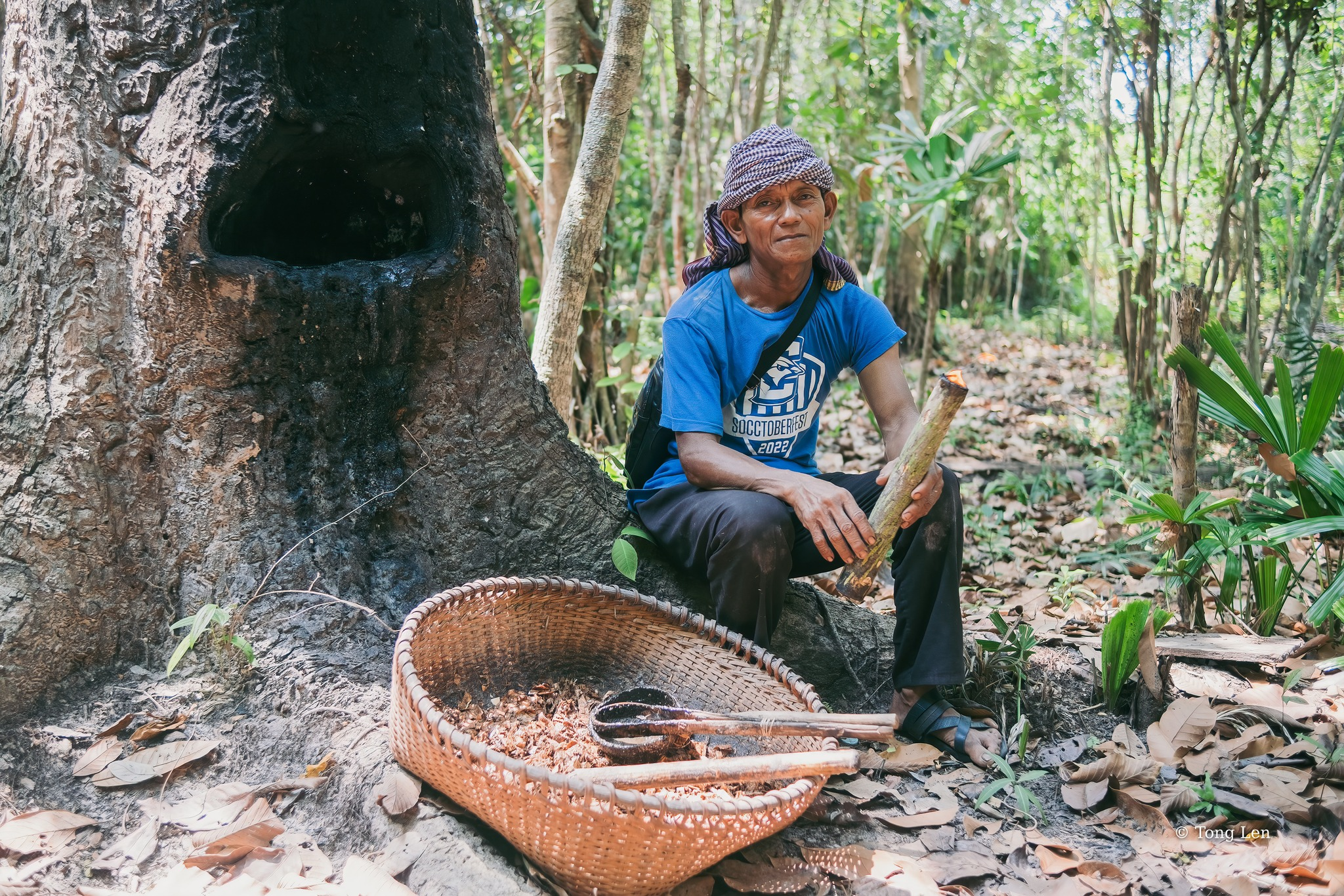
The Kui people in Cambodia are primarily concentrated in the north-central provinces of Preah Vihear and Kampong Thom. Their villages have traditionally been situated in relatively remote areas, often interspersed with Khmer settlements, although a trend towards relocating nearer to main roads has been observed in recent years. Linguistically, the Kui speak an unwritten Mon-Khmer language characterized by several dialects. The oral nature of their traditions is poignantly captured in a folk tale describing how their language, originally inscribed on a pigskin, was lost when dogs consumed it. Today, many Kui are bilingual, also speaking Khmer, which has led to a gradual language shift and erosion of their native tongue in some communities.
Historically, the Kui have been predominantly subsistence wet rice farmers, their agricultural practices labor-intensive, relying on traditional methods such as plowing with cattle or water buffalo. Their livelihoods have also been supplemented by the gathering of forest products, a practice now threatened by deforestation. Socially, high rates of illiteracy and limited access to formal education, typically available only for a few years and in the Khmer language, have contributed to their ongoing assimilation into the broader Cambodian culture. Ethnographic accounts sometimes describe the Kui as occupying a lower rung on the socio-economic ladder, occasionally facing prejudice from segments of the Khmer majority. This socio-economic positioning and cultural assimilation are critical factors when considering the trajectory of their traditional crafts.
B. Iron Smelting: A Cornerstone of Kui Identity and Traditional Economy
Despite their contemporary agrarian lifestyle, the Kui possess a deeply rooted historical reputation as exceptionally skilled iron ore smelters and blacksmiths. This metallurgical expertise was not merely an economic activity but a defining characteristic of their cultural identity for centuries. The region of Phnom Dek, literally “Iron Mountain,” stands as a testament to this legacy, being a historic Kui homeland and a crucial source of the iron ore they expertly transformed. Historical records indicate that the Kui were smelting iron for the Khmer elite as early as the 16th century, and archaeological and ethnographic evidence confirms the continuation of their traditional smelting practices well into the 1940s. This long history underscores the centrality of iron production to Kui society and its significant role in the regional economy. The geographical remoteness of many Kui communities, combined with their distinct language and highly specialized metallurgical skills, likely fostered a degree of cultural autonomy. Simultaneously, this unique expertise made them indispensable to larger, more centralized polities, such as the Khmer Empire, which required substantial quantities of iron. This created a dynamic tension: the Kui were able to maintain a distinct cultural identity, partly due to their specialized niche and relative isolation, even while engaging in crucial economic interactions and supplying strategic resources to a dominant power.
C. Spiritual and Ritual Dimensions of Kui Metallurgy
The spiritual world of the Kui is a syncretic blend, primarily rooted in animistic beliefs, which are considered older and more dominant, interwoven with elements of folk Buddhism. Their worldview includes a belief in a vibrant spirit realm that actively interacts with the physical world. Spirits are associated with natural features like trees and fields, and ancestral spirits are invoked for guidance and assistance. Some spirits are believed to cause illness, while others are thought to bestow magical powers upon certain individuals. The wearing of strings around the neck, waist, or wrists to ward off malevolent spirits is a common practice.
While specific details about rituals directly associated with Kui iron smelting in Cambodia are not extensively documented in the available sources, the broader context of Southeast Asian metallurgy suggests such practices were likely integral. Ironworking in the region was “frequently associated with spiritual beliefs and magical practices”. Accounts of Kui communities in Thailand, such as those in Ban Treum, note strong adherence to traditional mores and rituals related to ancestral spirits, including ceremonies for ensuring fertility and protecting health. One source even mentions the Kui’s use of “Brahmanical rites and incantations” in their ironworking, hinting at complex syncretic spiritual practices influencing their craft. Ethnographic parallels from other iron-smelting cultures, such as the Bantu people’s ceremonies involving ritual purity (e.g., naked men participating, exclusion of women), further illustrate the often deeply ritualized nature of transforming ore into metal.
The notable absence of detailed Khmer oral traditions or epigraphic records pertaining to the specifics of iron smelting is intriguing. If the Kui were indeed the primary iron producers for entities like the Angkorian state, it is plausible that their smelting practices, including the associated rituals, remained largely confined within their distinct cultural sphere, separate from the mainstream Khmer documentary traditions. This lack of direct information on Cambodian Kui smelting rituals underscores an urgent need for focused ethnoarchaeological research. Given that smelting continued into the 1940s and the Kui maintain a strong oral culture, it is conceivable that memories, or at least fragments, of these associated spiritual practices might still persist among the elder generations. Documenting such intangible heritage is a time-sensitive imperative. The pressures of assimilation, including language loss and the adoption of Khmer Buddhist practices, are likely compounded by the earlier decline of their unique, high-status economic niche. Without the defining craft of iron smelting, which once provided economic stability and perhaps a degree of cultural leverage, the Kui may experience increased economic marginalization, potentially making assimilation a more pragmatic or necessary path for social and economic survival.
III. The Alchemy of Iron: Technology and Archaeology of Kui Smelting
A. Traditional Smelting Processes: From Ore to Bloom
The Kui’s renowned metallurgical skill was founded on their sophisticated understanding of local resources and their development of effective smelting techniques.
Ore Sources: The primary source of iron ore for Kui smelters was the rich deposits of high-quality iron oxides found in the Phnom Dek (“Iron Mountain”) region Nineteenth-century observations noted that the Kui distinguished between two types of ore: a ‘heavy’ ore and a ‘light’ ore. The latter was reportedly preferred for its ability to produce harder iron, making it particularly suitable for the manufacture of weapons. This selection indicates a nuanced understanding of ore properties and their relation to desired product qualities.
Furnace Technology: Traditional Kui iron smelting, like much of early Southeast Asian metallurgy, generally involved direct smelting in relatively low shaft furnaces. These were typically vertical cylindrical or conical structures, perhaps 1-2 meters in height, built with clay and incorporating tuyères (clay pipes) near the base for introducing an air blast. However, a detailed 1880s account by European observers describes a distinct and more elaborate Kui furnace design. This furnace was a long, shallow, open-topped rectangular basin, approximately 0.9 meters wide, 2.5 meters long, and 0.4 meters deep, constructed from clay mixed with white sand. It rested on a substantial stamped-clay pedestal, raising the hearth about 80 cm above ground level. This design featured holes at both ends for tapping slag and, remarkably, 26 tuyères inserted into each of its long sides. This specific rectangular furnace form, with its numerous tuyères, suggests a highly developed and potentially unique technological tradition. Archaeological discoveries have lent credence to such descriptions. Excavations at the 13th-14th century Angkor-period site of Tonle Bak revealed rectilinear furnace bases, approximately 2 meters long and 1 meter wide, with an associated slag pit. These findings align more closely with the 19th-century rectangular furnace descriptions than with simpler cylindrical shaft furnace models. Regardless of the precise shape, furnaces were typically constructed of clay and, due to the nature of direct smelting, often had to be partially or fully broken down to extract the consolidated iron bloom.
Bellows: The efficiency of the smelting process is critically dependent on the air supply provided by bellows. General Southeast Asian practices included the use of bag bellows, made from animal hides and operated by hand, and later, more mechanically complex piston bellows, often made of wood and sometimes foot-operated. The 1880s account of Kui smelting details a particularly impressive bellows system: two large, drum-shaped bellows constructed from stamped clay, each fitted with a leather diaphragm. Each of these substantial bellows was reportedly operated by a team of three men, who pressed the diaphragm down using their feet, with a spring pole mechanism assisting in pulling the diaphragm back upwards to refill with air. This system, requiring significant manpower, indicates a capacity for generating a powerful and sustained air blast, crucial for achieving the high temperatures needed for smelting.
Fuel: The primary fuel for Kui iron smelting, as for most ancient iron production, was wood charcoal. Hardwoods were generally preferred due to their capacity to produce higher and more sustained heat. The Kui were noted to undertake their own charcoal production. The large-scale demand for charcoal for extensive iron production, such as that seen in the Phnom Dek region, inevitably led to significant deforestation in surrounding areas over time.
Process: The smelting process involved carefully layering iron ore and charcoal within the furnace. The 1880s description outlines a specific operational sequence: an initial period of about eight hours with a gentle air blast, followed by approximately four hours of a more vigorous pumping rate. A single heat, conducted over a day, was reported to yield between 10 to 15 kilograms of iron. This direct reduction process produced a spongy mass of metallic iron, known as a bloom, which was intermixed with slag (impurities from the ore). This bloom then required considerable further work, including repeated heating and hammering, to consolidate the iron and expel the remaining slag.
Products: The primary product of this bloomery process was wrought iron, a malleable metal suitable for forging into a variety of tools and weapons. The 19th-century Kui were observed to work the bloom into standardized half-kilogram bars with pointed ends. These iron bars were not only used locally but were also highly prized commodities, traded extensively throughout Cambodia, Annam (Vietnam), and Siam (Thailand), and were even used as a form of currency by the Lao people.
B. Archaeological Insights: Unearthing the Past at Phnom Dek, Preah Khan, and Tonle Bak
Archaeological research over the past few decades has significantly illuminated the vast scale and long history of iron production in northern Cambodia, particularly in areas historically associated with the Kui.
Phnom Dek Region: The area surrounding Phnom Dek is now recognized as a vast metallurgical landscape, potentially covering 400-600 square kilometers, with abundant evidence of iron mining and smelting activities. This region, a historic heartland of the Kui people, exhibits a remarkable chronological depth, with smelting operations spanning over a millennium, from perhaps as early as the 7th century CE up to the 20th century CE. Specific production sites within this broader landscape have been dated to periods such as the 9th–11th centuries AD and the 19th/20th centuries AD.
Preah Khan of Kompong Svay: This major Angkorian temple complex, located about 100 kilometers east of Angkor, has also yielded significant evidence of iron production. Iron smelting remains discovered within its enclosure walls primarily date from the terminal phase of the Angkorian period (roughly mid-14th to mid-15th centuries) and continue into the subsequent Middle Period. Radiocarbon dating of organic materials from the site suggests its establishment around the 11th century, with a notable increase in population and probable intensification of iron smelting activities by the mid-to-late 14th century. Industrial use of the site appears to have continued episodically even after the decline of Angkor. Preah Khan of Kompong Svay is hypothesized to have served as a crucial outpost for the Angkorian state, possibly facilitating the processing or movement of iron from the eastern production zones towards the capital. Interestingly, archaeometallurgical studies indicate that the iron production systems at Preah Khan utilized different ore sources compared to those exploited at sites nearer to Phnom Dek itself.
Tonle Bak: Situated a few kilometers south of Phnom Dek, Tonle Bak has provided some of the most direct evidence for Angkor-period iron smelting technology. Excavations at one mound (STB-01) revealed iron production dating from the 9th to 11th centuries. More significantly, work at another mound (STB-02) uncovered the first
in situ remains of Angkor-period furnaces, dated to the 13th-14th centuries. These furnaces were rectilinear in shape, typically measuring around 2 meters in length and 1 meter in width, with an associated slag pit positioned to one side. This discovery is particularly important as it provides archaeological corroboration for the rectangular furnace designs described in 19th-century ethnographic accounts of Kui smelting. Analysis of slag morphology from Tonle Bak suggests that the smelting process achieved good separation of a relatively low-viscosity slag from the iron bloom.
Slag Analysis: A key tool in understanding ancient metallurgical practices is the chemical analysis of slag, the waste product of smelting. Statistical analysis of slag chemistry from various sites, including those at Preah Khan of Kompong Svay and in the Phnom Dek area, has indicated a remarkable degree of technological conservatism. Despite the use of different ore sources at times, the fundamental chemical signatures in the slag appear to have remained consistent for over a millennium.2 This suggests a stable and deeply ingrained technological tradition.
The highly specific and elaborate furnace and bellows system described in the 1880s for the Kui, if it accurately reflects earlier practices, points towards a sophisticated, culturally embedded technology that would not have been easily replicated by outsiders. The very specificity of such a system—the rectangular furnace, the multiple tuyères, the large clay drum bellows—implies a deep, culturally transmitted body of knowledge. The discovery of rectilinear furnaces at the Angkor-period site of Tonle Bak lends archaeological weight to the idea that these 19th-century observations may indeed reflect a long-standing tradition. If this specialized system was largely unique to the Kui, it would solidify their role as indispensable specialists. However, the complexity of such a system also means that any significant disruption to the Kui community or its traditional practices could lead to a more complete and rapid loss of this specific technological knowledge compared to simpler, more widespread techniques.
The massive scale of the Phnom Dek industrial landscape implies a highly organized system of labor and resource management. Smelting, as described, was labor-intensive, requiring multiple operators for bellows alone, in addition to those involved in mining ore and producing vast quantities of charcoal—a process that itself was labor-intensive and led to significant deforestation. To supply a large and demanding entity like the Angkorian state, production would need to have been consistent and large-scale. This suggests an organizational structure extending beyond individual village-level production, likely involving specialized labor roles (miners, charcoal makers, smelters), coordinated management of ore and forest resources, and established trade or transport networks. Such a system may have been overseen or at least significantly influenced by the Angkorian state or powerful local elites, moving beyond simple household craft production into the realm of organized industry.
Table 1: Key Archaeological Sites of Kui Iron Production
| Site Name | Chronology | Key Archaeological Features/Finds | Hypothesized Role/Significance | |
| Phnom Dek Area | 7th-20th c. CE (general); specific sites 9th-11th c. AD & 19th/20th c. AD | Vast industrial landscape (400-600 km²), mines, evidence of diverse smelting traditions, extensive slag deposits, historic Kui homeland. | Primary ore source for Cambodia; long-term, large-scale iron production hub. | |
| Preah Khan of Kompong Svay | Angkorian terminal phase (c. mid-14th c.) – Middle Period (post-15th c.); established c. 11th c. | Smelting remains within temple complex, distinct ore sources used compared to Phnom Dek sites. | Angkorian outpost; possibly a secondary processing center or logistical hub for iron movement to the Angkorian capital. | |
| Tonle Bak | Iron production 9th-11th c. AD (mound 1); in situ Angkor-period furnaces 13th-14th c. AD (mound 2). | Multiple slag mounds, first in situ Angkor-period rectilinear furnaces discovered, specific slag morphology indicating efficient smelting. | Provides direct evidence of Angkor-period furnace technology and smelting practices, likely linked to Phnom Dek ore exploitation. |
C. Technological Conservatism and Adaptation Over Millennia
The evidence for technological conservatism, primarily derived from the consistent slag chemistry over more than a thousand years, suggests a remarkably stable and effective iron production system. This stability implies that the core methods of smelting, once established, were well-suited to the available ores (particularly those from Phnom Dek) and the needs of the consumers. Studies comparing smelting heritage from Angkorian, Post-Angkorian, and more recent Kui production sites have indicated basic continuities in the iron production process.
However, this picture of conservatism is nuanced by findings that suggest the presence of at least three different smelting traditions within the broader Phnom Dek region. This apparent contradiction—long-term conservatism alongside multiple traditions—is not necessarily irreconcilable. It could indicate several possibilities: different ethnic groups may have been practicing metallurgy in the same expansive region, each with their own variations; or the Kui themselves may have adapted their core technology to suit different types or grades of ore encountered within the vast Phnom Dek area, or to meet varying scales of production demand over their long history. These adaptations might still result in broadly similar slag chemistry if the fundamental approach to ore and fuel use remained consistent. Thus, the technological landscape was likely characterized by a complex interplay of deeply rooted cultural tradition, adaptation to local resource variability, and potentially, interaction with other groups or evolving socio-economic demands, rather than a single, monolithic, and unchanging technology across all times and locations.
IV. Forging an Empire: The Role of Kui Iron in Angkorian Cambodia
A. Iron’s Indispensability: Agriculture, Construction, and Military Might of the Khmer Empire
Iron was an unequivocally crucial commodity for the Khmer Empire, which flourished from the 9th to the 15th centuries AD and dominated much of mainland Southeast Asia. This versatile metal was integral to nearly every facet of Angkorian society and its imperial ambitions. In agriculture, iron tools such as ploughshares and sickles were essential for the intensive rice cultivation that formed the bedrock of the Khmer economy, feeding its large population and enabling surplus production. In construction, iron was indispensable. Tools made of iron were used to quarry, transport, and carve the massive stone blocks used in the empire’s iconic temples and extensive hydraulic systems, including canals and reservoirs. Furthermore, iron was used directly in the monuments themselves, often in the form of clamps or reinforcement bars to secure stone elements, a practice evident in structures like Preah Khan. The permanent switch to sandstone as a primary building material and the increased utilization of iron sourced from the Phnom Dek region appear to be correlated with significant changes and developments in Angkorian temple architecture, particularly between the 11th and 13th centuries. Beyond tools and structural components, iron armatures were also found inside bronze religious statuary, indicating its use in sophisticated artistic production.
Perhaps most critically for an expanding empire, iron was the backbone of its military strength. Weapons—swords, spearheads, arrowheads—were forged from iron, equipping the Khmer armies for territorial expansion, defense against rivals like the Cham, and maintenance of internal order. The military campaigns that characterized much of Angkor’s history would have been impossible without a reliable and substantial supply of iron.
B. The “Angkorian Kui” Hypothesis: Examining the Evidence
Given the immense importance of iron, the question of who produced it for the Angkorian state is central to understanding the empire’s economic and technological foundations. A prevailing hypothesis, often termed the “Angkorian Kuay” hypothesis, posits that a specialized smelting community—most likely the ancestors of the modern Kui people—was primarily responsible for producing iron in the regions around Phnom Dek, which then supplied the Angkorian heartland. This hypothesis is supported by several lines of reasoning: the Kui’s well-documented historical reputation as expert smelters, their historical association with the iron-rich Phnom Dek area, and the conspicuous absence of detailed Khmer-language oral traditions or epigraphic inscriptions that describe iron smelting processes. This silence in Khmer records suggests that the craft may have been the domain of a distinct, non-Khmer group.
Archaeological projects such as the Industries of Angkor Project (INDAP) and the Iron Kuay Project have been instrumental in testing this hypothesis, primarily by examining technological continuity between known Angkorian-period production sites and sites associated with later or modern Kui smelting. As previously noted, preliminary results from slag analyses have indicated a significant degree of technological conservatism in smelting practices spanning more than a millennium, which could suggest a continuous tradition passed down through generations of Kui smelters. Furthermore, the discovery of rectilinear furnaces at the Angkor-period site of Tonle Bak shows striking similarities to the furnace designs ethnographically documented among the Kui in the 19th century, potentially bolstering the argument for continuity.
However, the picture is not entirely straightforward. While there is evidence for technological conservatism, studies have also shown that different ore sources were exploited by the production systems at Preah Khan of Kompong Svay compared to those nearer Phnom Dek. More significantly, recent research identifying at least three distinct smelting traditions within the broader Phnom Dek region challenges the notion of a single, uniform Kuay practice extending unchanged deep into Cambodia’s past. This suggests that the relationship between the Kui, iron production, and the Angkorian state might have been more complex and varied than a simple, direct lineage implies. It is possible that other groups were also involved in smelting, or that Kui technology itself underwent periods of diversification or specialization.
If the “Angkorian Kuay” hypothesis holds substantial truth, it implies a sophisticated system of resource management and inter-ethnic relations orchestrated by the Angkorian state. The Khmer elite would have been reliant on a culturally distinct, geographically somewhat “peripheral” group for a resource of paramount strategic importance. This scenario suggests a more complex and perhaps less centralized model of imperial economy than is often portrayed, one characterized by interdependence rather than solely top-down control. The Khmer state’s power in military affairs and monumental construction would have been, in part, contingent upon the specialized skills and labor of a non-Khmer people.
C. Integrating Peripheral Production: Iron, Trade Networks, and State Power
The Phnom Dek region, as the largest source of high-grade iron ore in Cambodia, was strategically vital. Its connection to the Angkorian capital was facilitated by an extensive network of ancient roads, underscoring the importance of this resource flow. Large temple complexes located along these routes, such as Preah Khan of Kompong Svay, are thought to have played roles as key conduits or administrative outposts, possibly overseeing or facilitating the movement of iron from the production zones to the consumers in the heartland and beyond.
The capacity to exploit and transform the vast iron ore resources of Phnom Dek on a scale sufficient to meet Angkor’s demands suggests either the introduction of new technical enhancements (such as more efficient furnace designs or air delivery mechanisms) or, crucially, the development and maintenance of stable social and economic relationships with the iron-producing communities themselves. Archaeological evidence from sites like Tonle Bak indicates that local iron production was directly integrated into the Angkorian state’s exchange networks. This integration implies a system, whether based on tribute, trade, or direct administration, that ensured the flow of this essential metal.
 Previous Post
 Next Post
 Preah Vihear
 015 498 667