
Iron Slag (Arch-Dek) is far more than just discarded stone; it is a “witness to history.” It serves as tangible evidence of the sophisticated technology of the Khmer Empire and, specifically, the specialized skills of the Kui indigenous people, who were the master iron-smiths of the region.

1. The Blacksmiths of the Empire
The Kui people have long been recognized as the masters of iron-smelting technology in Southeast Asia. During the Angkorian Era (9th–15th centuries), they played a vital role as the industrial backbone of the empire:
-
Military Might: The Kui provided the high-quality steel required to forge swords, spears, and arrows. This allowed the Khmer military to maintain its dominance and expand its borders.
-
Architectural Engineering: Beyond weapons, iron was essential for construction. Thousands of iron cramps (staples) were used to bind massive sandstone blocks together in temples like Angkor Wat and Bayon, ensuring structural stability for centuries.
-
Agricultural Tools: The expansion of the empire’s vast irrigation system and rice production was only possible through the mass production of iron axes and plowshares.
2. The Historic Center: “Phnom Dek” (The Iron Mountain)
The primary hub for this industry was located at Phnom Dek, situated in modern-day Rovieng District, Preah Vihear Province.
-
Geological Richness: This area is home to exceptionally high-grade iron ore.
-
Strategic Location: Phnom Dek was connected to the capital at Angkor via a sophisticated network of ancient roads, specifically the “East Road,” which linked Angkor to the temple complex of Preah Khan of Kompong Svay—a site heavily involved in iron processing.

3. Technology and Technical Mastery
Smelting iron in the ancient world was an arduous task that required a deep understanding of chemistry and thermodynamics.
-
The Bloomery Furnace: The Kui built furnaces using specific clays (often mixed with termite mound earth) capable of withstanding extreme temperatures between 1,200°C and 1,400°C.
-
The Reduction Process: Using bellows made of animal hides or hollowed wood, they pumped oxygen into the furnace to keep the charcoal burning hot enough to separate the iron from the rock.
-
The Creation of Slag: As the ore melted, the “pure iron” (bloom) would settle at the bottom. The impurities, known as slag, would float or be tapped out. Today, these piles of slag are archaeological “fingerprints” that tell scientists exactly how hot the fire was and what techniques were used.

4. Sacred Rituals and Beliefs
For the Kui, smelting was never a purely industrial act; it was a sacred spiritual process.
-
Spiritual Permission: The Kui believe in “Areak” or “Neak Ta” (ancestral spirits) who guard the mountains. Before mining or lighting a furnace, elaborate ceremonies were held to ask for permission and protection.
-
The “Kru Dek” (Iron Master): The lead smith was both a technician and a shaman. He possessed the “secret formulas” for the metal and the spiritual authority to lead the rituals, ensuring the spirits wouldn’t “hide” the iron or cause the furnace to fail.
Note: Iron slag is a precious archaeological asset. It marks the sites of ancient industrial “factories” and helps historians map the economic power of the Khmer Empire.
Academic References & Historical Sources
If you wish to delve deeper into this research, the following scholars and projects offer the most authoritative information:
-
Dr. Thuy Chanthourn:
A prominent Khmer archaeologist from the Royal Academy of Cambodia. His extensive fieldwork in Preah Vihear and Kompong Thom has mapped hundreds of ancient smelting sites, proving that iron production was a massive, centralized industry during the Angkor period.
-
Paul Lévy (1943):
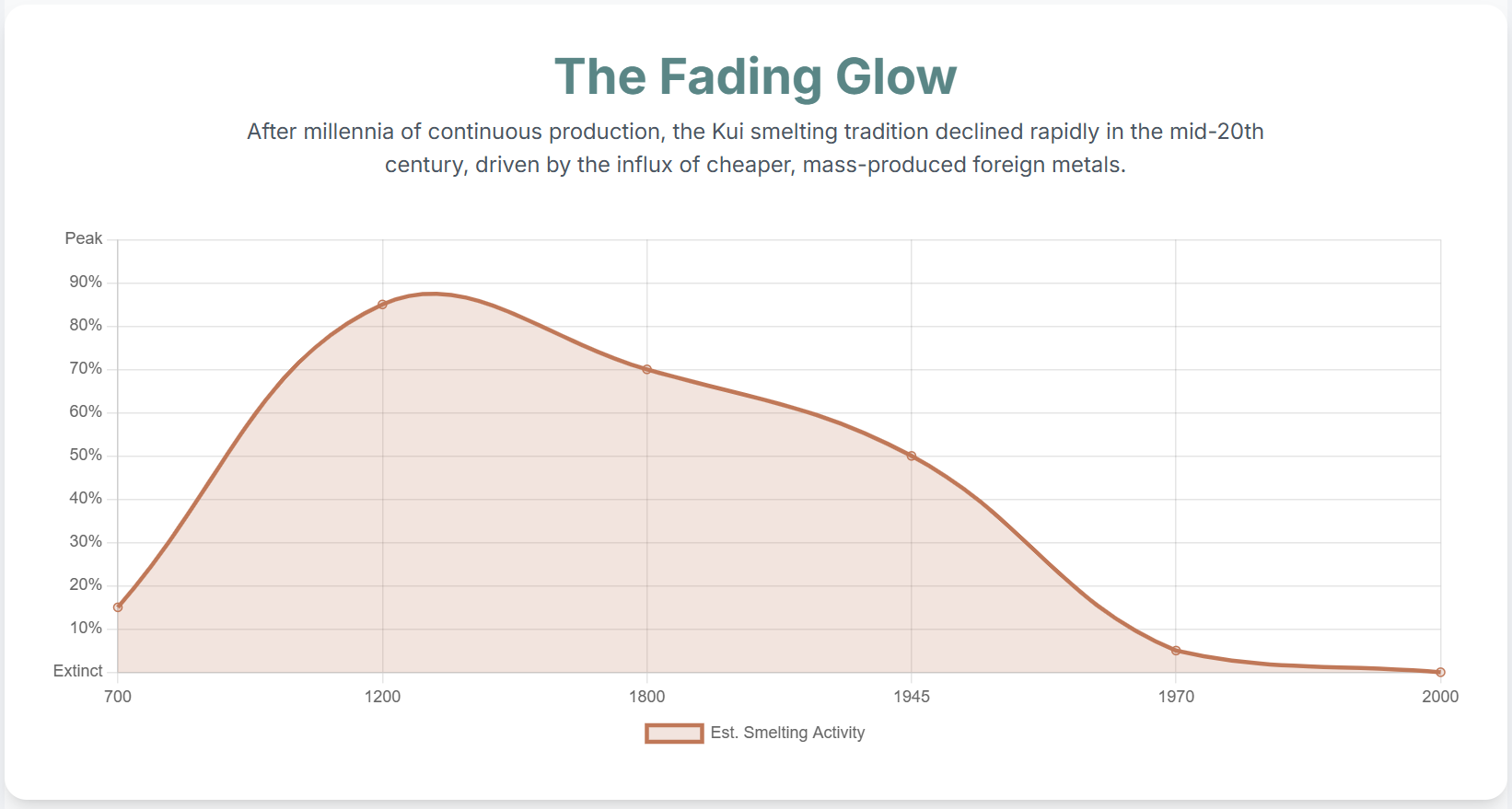
A French researcher who documented the Kui people’s smelting techniques in the mid-20th century. His records are vital because they captured the “living tradition” of Kui metallurgy before it largely disappeared due to modern industrial imports.
-
The “Industries of Angkor Project” (INDAP) by Mitch Hendrickson:
This international project uses modern science (like chemical sourcing) to trace iron from Phnom Dek to the specific temples in Angkor. Their paper, “Smelting in the Shadow of the Iron Mountain,” is a definitive resource on the subject.
-
The Records of Zhou Daguan (1296):
While the Chinese diplomat didn’t describe smelting techniques, his journals mention the abundance of weapons and the use of iron in Khmer society, confirming the high demand for the metal produced by the Kui.
 Previous Post
 Next Post
 Preah Vihear
 015 498 667